
One Input. No Take-Backs.
A crane sweeps your next block across the tower on a fixed arc. You can't move it, nudge it or undo it. You choose exactly one thing: the moment you let go.
Physics stacking challenge
A crane swings your next block over the tower. You get one input: when to tap. Stack as high as you dare — then watch it all come down.
What is Stackfall?
A crane sweeps your next block across the tower on a fixed arc. You can't move it, nudge it or undo it. You choose exactly one thing: the moment you let go.
Each piece is a small character with a face and a temperament. They squint, they fret, they sweat as the tower sways — and the one that falls gets spiral eyes.
The game never gets harder. No speed-ups, no dirty tricks, no rigged physics. Your structures just get taller — and everything you rushed down at the bottom starts to matter.
Height earns capability, not costumes. Wide decks, leaning blocks, a preview of what's coming next. Every unlock is a better way up.
Cross a checkpoint and the bottom of your tower petrifies into permanent stone. Every future run starts at that altitude. Progress you get to keep.
Climb past the clouds and the sky starts noticing. A little guy eating mustard. A watcher who waves back. A moon that wakes up. Every sighting goes in your journal.
How it works
Your next block sweeps back and forth above the tower. That arc is fixed — it's the only thing standing between you and gravity.
No dragging, no aiming, no placing. The whole game is the instant you choose to let go.
The block keeps the crane's sideways speed as it falls, and the swing is fastest through the middle — so a dead-centre tap still drifts. Good players learn to lead it.
It settles, or it sways. Faces go calm, then worried, then outright panic. Overhang is fine. Sliding off the pad is not.
Every metre is yours to keep. Bank a checkpoint and the next run starts up where this one got to.
Screens
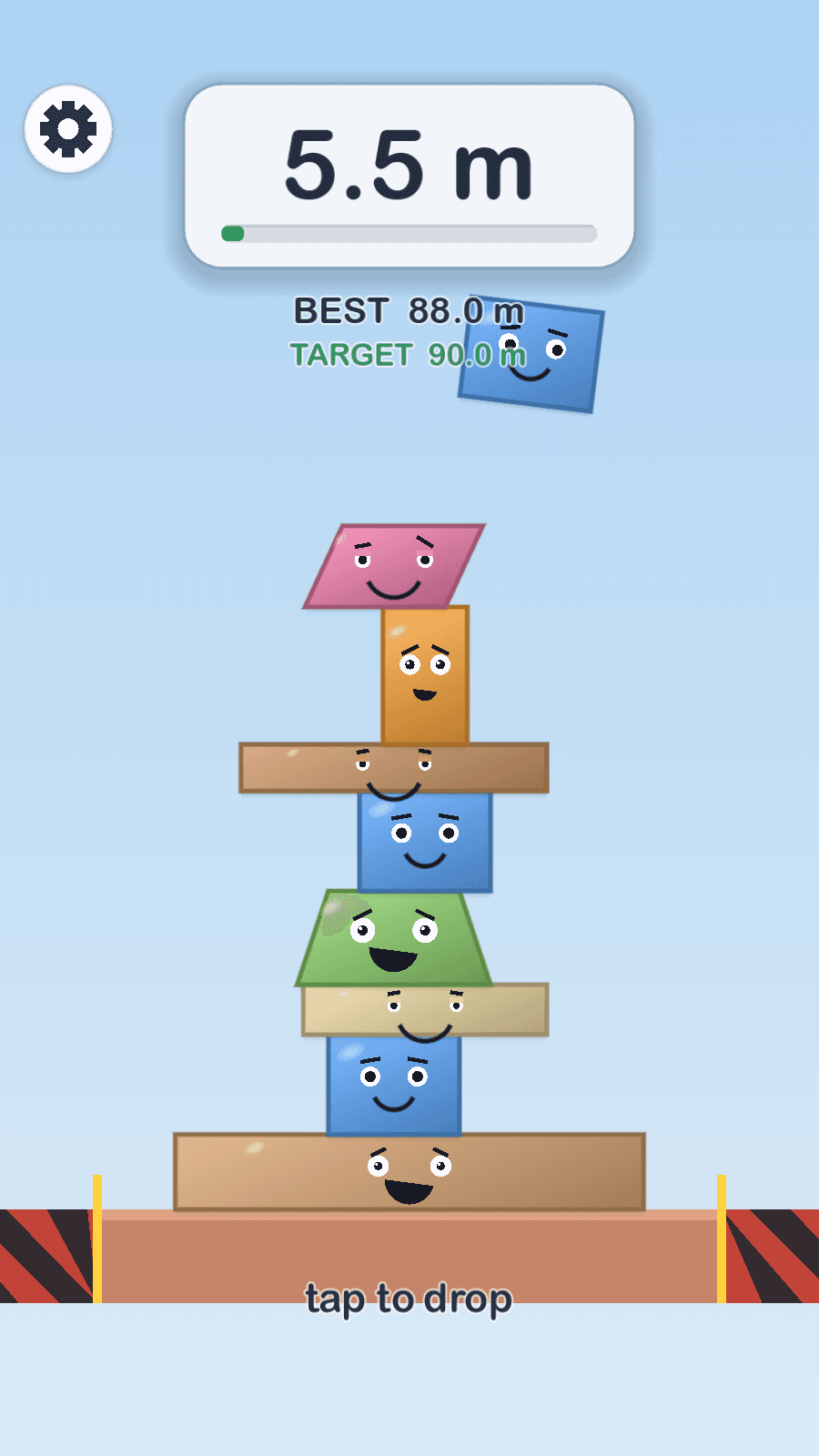
The crane swings your piece. Tap to drop it — and hope it lands well.
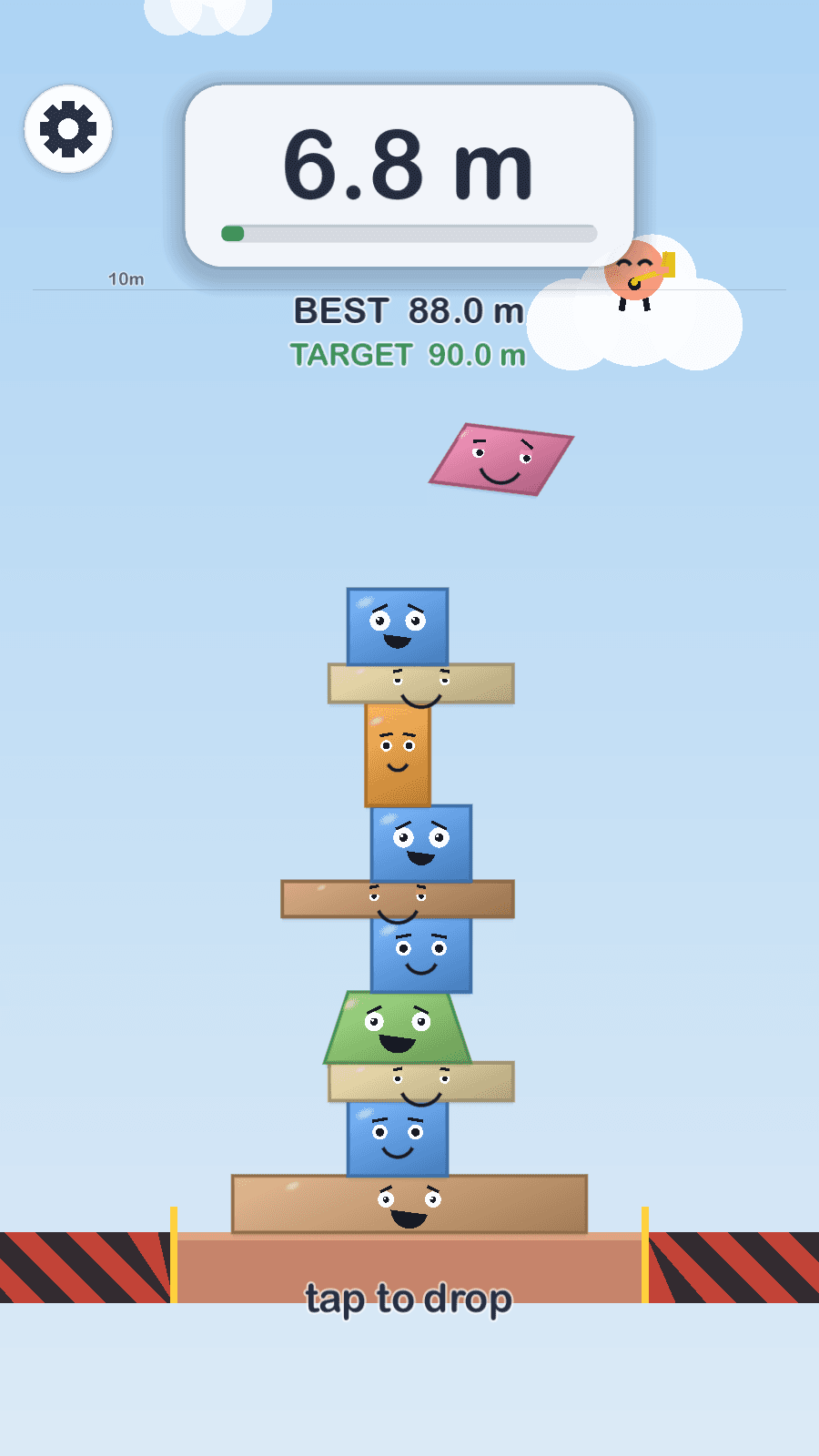
Climb high enough and you'll meet whoever lives up there. Yes, he's eating mustard.
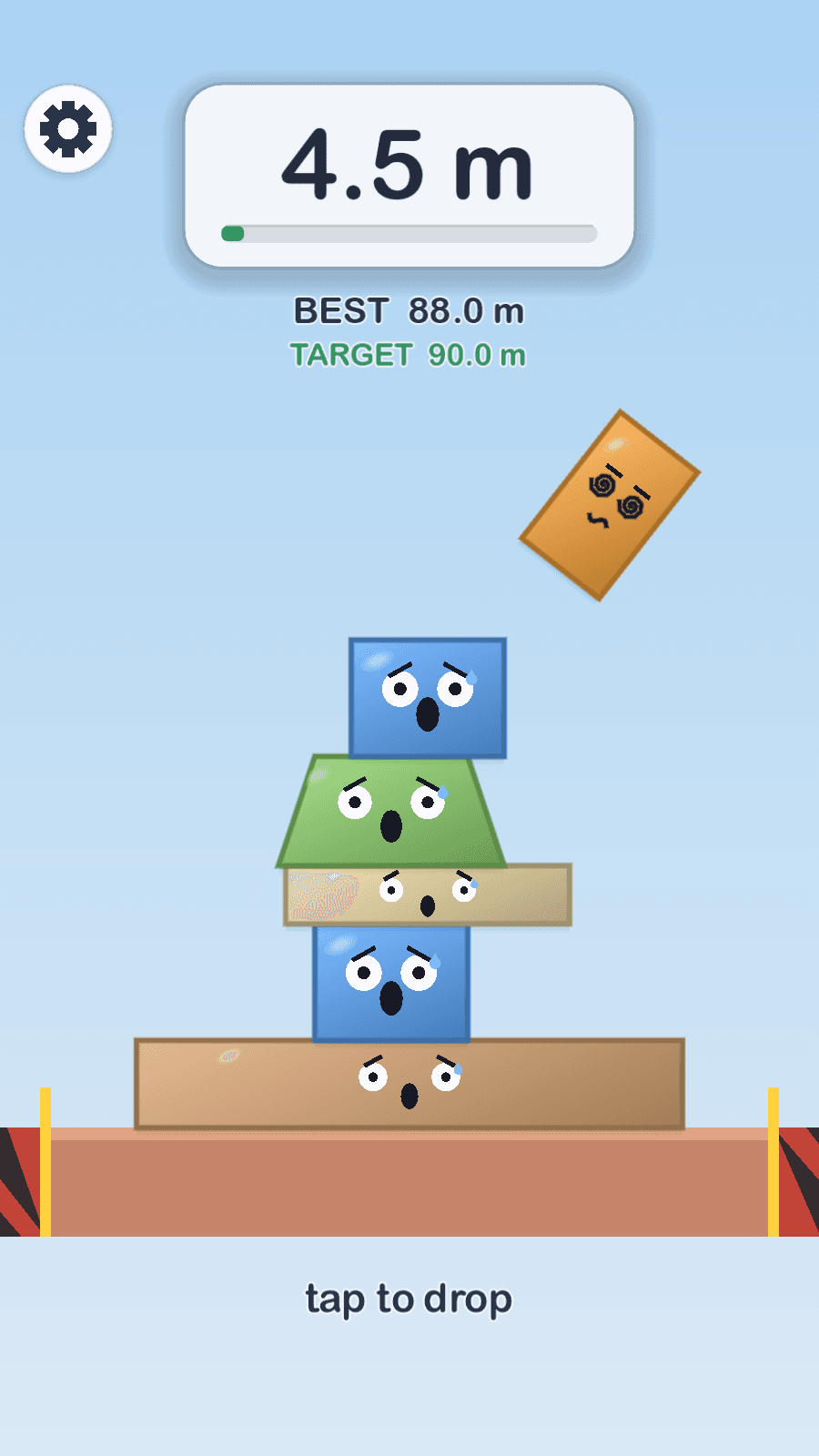
One bad drop brings it all down — panicked faces, spiral eyes, and a very satisfying collapse.
The crane swings your piece. Tap to drop it — and hope it lands well.
Climb high enough and you'll meet whoever lives up there. Yes, he's eating mustard.
One bad drop brings it all down — panicked faces, spiral eyes, and a very satisfying collapse.
Why it's addictive
You don't place them. A crane swings each block on a fixed arc and you tap to drop it — that is the entire input. Stackfall is a timing game wearing a builder's clothes.
Calm focus, then sudden collapse. You build carefully for two minutes, and one mistimed tap brings the whole thing down — in slow motion, with a spotlight, because by then you've earned it.
Stack as high as you can and beat your best height. Cross a checkpoint and the base of your tower is banked as permanent stone, so your next run starts at altitude instead of at zero.
No. The piece order changes, your tower changes, and the higher you climb the stranger the sky gets. Some of what's up there only turns up rarely.
Your timing. You learn what each shape weighs, and that a dropped block inherits the crane's momentum — so you stop tapping at the middle and start leading the swing.
The physics is honest and never rigged against you. The game never gets harder. The structures get taller, and the mistakes get heavier.
Play Stackfall
Build carefully. Or build dangerously. Just don't let it fall.